Monday, 24 March 2014

Wednesday, 26 February 2014
15. Printing
Printing
When I showed my lecturer my contact sheet, he pointer to one image which I should print out first, as it had an even exposure throughout, on the contact sheet. In doing this, I would have a general idea of the timings I would be looking at for my images.

Filter Grade -2 F5.6 25 Seconds
My Final Images
I completed and developed my three films rather successfully, at first thought, but successfully enough to not have to consider using my digital images. My Contact Sheets look good, but they are fairly average, as most of the images are quite distant and very far away from the subject, which I feel brings the quality of the film down.Print No. One

Grade two filter - f 5.6 - 24 Seconds
This is one of my favourite images from my three films which I took with the Cockle Pickers. I feel that this single image captures the essence of this back-breaking livelihood.
I am very happy with the composition of this image; it shows us the process of riddling the cockles, which is one of the most difficult things to do as the riddles are full of cockles and sand, which need to be sieved to make sure any small cockles go back. The image also shows us the equtment that is used when they go out to pick cockles; including the riddle, two rakes, buckets which are filled and then emptied into sacks which are also brought out with the cockle pickers.
The photograph is full of textures, including water and sand, the sacks and also the clothing which is nice to have visible in the image. I am also very fond of the detail of the sand falling through the riddle.
Print No. Two

Grade 2 Filter - F 5.6 - 17 Seconds
This is an image which I feel has to to be a part of the project. I did have a similar image, which I had included in my start of year presentation, but this was a one off which I took last year. I was fond of the image, so I aimed to recreate it when out with the cockle pickers. It was fortunate that I went out when I did, after severe weather conditions, especially windy conditions, a lot of cockles are brought to the surface. This gave me a chance to photograph a mass of cockles.
I found the exposure of this image quite difficult to work with; as much as the overall image looks dark, if I'd done it any lighter I would have lost the derail in the lightest part of the shells. This does make it difficult to see the details in the darker areas, although the details are still present.
Print No. Three

Grade No. Two Filter - F 5.6 - 27 Seconds
This is also another photograph which could be considered for my final three images. I knew I wanted a photograph which focused on the equipment itself, as this is something that hasn't changed in the industry for decades, and this is something which I feel makes the whole process special and unique.
I am very fond of this image. Much like the first image in my series, the textures are something which really stands out, this is also emphasised not only in the equipment and nets of the image works very well.
I thought the exposure of this image was good, as the blacks of the image were very black but you can also make out the details in the lighter areas, such as tag on the bag, which I thought was a nice touch.
Print No. Four

Grade No. 2 Filter - F 5.6 - 27 Seconds
I really liked the composition of this image, which is the main reason why I wanted to print it.
Unfortunately once I'd printed this image on a larger scale, it became apparent that there were several water droplet marks on my first original film. I always find this to be a larger problem than it seems because once the film has been cut into strips of six it becomes very difficult to re-dry the negatives, as there isn't enough space around the images on the negatives. This is fairly risky because it means there is a bigger risk of the negatives getting damaged.
Overall I did really like this image. We have our subject matter quite close to the camera, emphasizing on these full sacks, then in the background you can see the cockle pickers and the horizon.
Print No. Five

Grade No.2 Filter - F 5 - 37 Seconds.
This was another strong compositional photograph from my films. I did try to mix up my images as much as I could, so I did spend some time photographing the vehicles they used to go out onto the cockle beds. It is very essential to the Cockle Pickers, but this is also one of the only things that HAS changed about the technique.
I jumped out of the four by four at this moment because a rainbow had appeared amongst the mix of weather, so I wanted to photograph it. This image would have been stronger if there was a better pattern in the clouds, unfortunately it's quite a flat image.
I also noticed, once I'd enlarged this photograph that there were visible lines running through the image, which I believed was caused by the squidgy. Unfortunately this has damaged many of the images on the third film.
Print No. Six

Grade No.2 Filter - F5.6 - 21 Seconds
Again, another strong compositional shot, which I saw from my contact sheets.
Much like print number four, I like having the subject in the foreground, in focus and clear, with an interesting background, with cockle pickers dotted along the horizon. This is good because it also mixes up my range of images and different approaches to the subject.
I would have defiantly considered this image to be one of my final prints if the bucket in the foreground had been more central. At the moment the bucket is much too close to the edge of the frame, this was a problem with my approach when taking the image, not in printing. Might be worth retaking this image if I were to go out with the Cockle Pickers again.
Much like print number four, I like having the subject in the foreground, in focus and clear, with an interesting background, with cockle pickers dotted along the horizon. This is good because it also mixes up my range of images and different approaches to the subject.
I would have defiantly considered this image to be one of my final prints if the bucket in the foreground had been more central. At the moment the bucket is much too close to the edge of the frame, this was a problem with my approach when taking the image, not in printing. Might be worth retaking this image if I were to go out with the Cockle Pickers again.
Wednesday, 12 February 2014
14. Tony Ray Jones

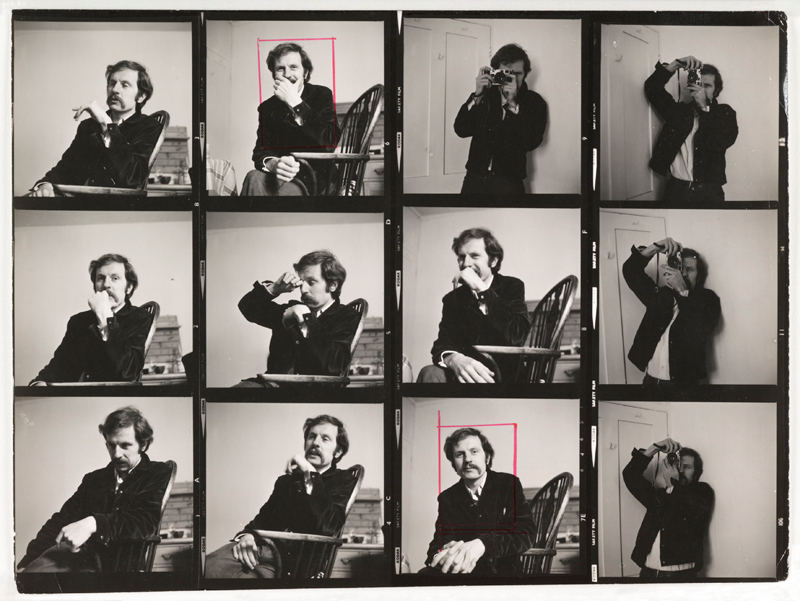
Tony Ray-Jones (1941 - 1972)
Tony Ray-Jones' street photography is something that has highly influenced several contemporary photographers of our time. Ray-Jones' had a short lived career in photography, but this is a photographer whose work I have managed to see on display at the Science Museum, London, and it has come to be a photographer whose work I have grown very fond of.

Tony Ray-Jones was the youngest son of Raymond Ray-Jones, who was a well known painter and etcher. He began studying Graphic Design at the London College of printing , where he began experimenting with photography with his lecturer, Rolf Brandt, who introduced Ray-Jones to his brother, Bill Brandt who become a great influence. After completing his Graphic Design Course, Ray-Jones won a scholarship to Yale University, this is where his interest in photography grew and after he graduated he began to work as a freelance photographer. Ray-Jones returned to Britain in 1996 and began documenting English Traditions and customs, which Ray Jones saw and approached with a foreigners eye, which allowed the behaviour of the English to fascinate him.

I have decided to look at Tony Ray-Jones' style of printing, more than his approach to his subjects. I was fortunate enough to view some of Tony Ray-Jones' photographs a few weeks ago, and along with his images we were met with pages and pages of Ray-Jones' notes within his Journals that he kept over the years.
I noticed that Tony Ray-Jones was very critical of his own work and also spent a lot of time preparing himself for what he might photograph. He also took great care in printing his images, with endless annotations and objects he'd create to dodge and burn specific areas of an image. I would consider him a perfectionist in several ways!

Tony Ray-Jones' images were always printed to a very high standard, where blacks are blacks and whites are the most pristine of whites. His images are crisp and full of contrast. Overall I would say that Tony Ray-Jones had more of a dark approach to his images, a guarantee filter used every time. The crispness and contrast of his prints is something I would very much like to recreate in my images, when possible. I also viewed several of his Contact Sheets, which were full of Ray-Jones' thought processes etc.
Bibliography
http://www.amateurphotographer.co.uk/how-to/icons-of-photography/534741/tony-ray-jones-iconic-photographer
I have decided to look at Tony Ray-Jones' style of printing, more than his approach to his subjects. I was fortunate enough to view some of Tony Ray-Jones' photographs a few weeks ago, and along with his images we were met with pages and pages of Ray-Jones' notes within his Journals that he kept over the years.
I noticed that Tony Ray-Jones was very critical of his own work and also spent a lot of time preparing himself for what he might photograph. He also took great care in printing his images, with endless annotations and objects he'd create to dodge and burn specific areas of an image. I would consider him a perfectionist in several ways!
Tony Ray-Jones' images were always printed to a very high standard, where blacks are blacks and whites are the most pristine of whites. His images are crisp and full of contrast. Overall I would say that Tony Ray-Jones had more of a dark approach to his images, a guarantee filter used every time. The crispness and contrast of his prints is something I would very much like to recreate in my images, when possible. I also viewed several of his Contact Sheets, which were full of Ray-Jones' thought processes etc.
Bibliography
http://www.amateurphotographer.co.uk/how-to/icons-of-photography/534741/tony-ray-jones-iconic-photographer
Monday, 10 February 2014
13. Contact Sheets (Film)
Contact Sheet One

Contact Sheet Two

Contact Sheet Three

Remember to write about why you've chosen to use film in your Major Project.
When I look at my contact sheets all together, as a whole, I am generally very happy with the images I have produced. The exposures of the image are all quite good, with perhaps only on or two images being overexposed, and the odd image underexposed, but this is expected. I did find that the 400 ISA did read as being too sensitive, as it was a fairly bright day. It might have been worth having another camera with a less sensitive film as a just in case. I took two cameras, one with a 50mm lens on it, another with a 35mm-70mm lens on it; this would have saved changing lenses while being on a beach, in poor weather conditions, with the odd shower. One thing I did regret was not having the confidence to get up close to the cockle pickers. There was the odd close image, but there could have been more. I also managed to capture some other aspects which add to the story of the cockles, including a shellfish stall in Llanelli Market. I also managed to photograph my grandfather processing cockles, not including boiling. I wanted to touch on the process as it is something that I am interested in documenting for my Major Project.
Sunday, 9 February 2014
12. Contact Sheet (Digital)
I had decided to take as many camera as I could possibly carry on me, when I went out cockle picking with Tony. I knew I wanted to have my final images on 35mm film ideally, but with the various weather conditions, I had decided to take my Digital camera along with me, just in case.


As you can see, I have briefly annotated my contact sheet. Most of my notes simply highlight how the majority of the images are simply landscape photographs, with very little focus on the cockle pickers themselves. This is something I have left for my film camera.
As you can see, I have briefly annotated my contact sheet. Most of my notes simply highlight how the majority of the images are simply landscape photographs, with very little focus on the cockle pickers themselves. This is something I have left for my film camera.
Wednesday, 5 February 2014
11. Sebastião Salgado
 Salgado is another documentary photographer whose work I've found very useful to look at, especially as Salgado focused on workers from various industries around the world. Salgado was born in the state of Minas Gerais, Brazil on February 8th, 1944. He began studying economics, and didn't begin his career as a professional photographer until 1973, when he moved to Paris, where he worked with the Sygma, Gamma and Magnum agencies. He worked with these agencies until 1994, until he and Lelia Wanick formed 'Amazonas Images', which was created especially for Salgado's work.
Salgado's dedication to his projects has taken him to over 100 countries, most of these finding themselves in some of his books including; 'Other Americas' (1986), 'Workers' (1993) and 'Migrations and Portraits' (2000), which are a fraction of his large number of books. He's won several awards for recognition of his accomplishments and he is an honorary member of the Academy of Arts and Sciences of the United States.
 |
| Picking Tea, Rwanada, 1991 |
Salgado has a mixture of close-ups and also has landscape images which allows a diverse mixture of images in a single project. Close images allow emphasis on the details within a project, it really focuses on the subject; in the project with the tea leave pickers, even though our subject is the pickers themselves, there are still close up images of the tea leaves themselves, as they are just as important to the project.
 |
| Picking Tea, Rwanada, 1991 |
Please find some links below to great websites where you can find out much more information about Salgado and browse more of his images.
https://www.artsy.net/artist/sebastiao-salgado
http://www.amazonasimages.com/
http://thephotographersgallery.org.uk/sebastiaosalgado
http://www.masters-of-photography.com/S/salgado/salgado.html
Tuesday, 4 February 2014
10. Going Cockle Picking!
Fortunately for me, my grandfather spent his whole like on the coast. The small village he lived in, 'Bwlch', was full of cockle pickers, fishermen and the odd farmer. Along with this, it was the main road through Bwlch which the cockle pickers used to get onto the sands. When I mentioned my project to him, and how I wasn't sure who I could speak to about it, he thought of one of his friends, who he refers to as Tony Cockles. He is one of my grandfather's dearest friends, with whom he grew up with, and my grandfather assured me that Tony would be more than happy to help.

November 7th, 2013
After a few weeks of worrying and wondering how I'd get out with the Cockle Pickers, and after some dead end research into who I might know, my grandfather managed to get in touch with Tony Cockles and they agreed to a date and time I'd be able to go out picking cockles.
I was beyond excited, but I was also slightly nervous. I will always remember my family telling me that the tidal current on the Burry Inlet is recognised to be one of the strongest in the UK, and this has always scared me. Knowing that these cockle pickers walk on sand which is normally completely covered by a few feet of rushing sea water, is a slightly frightening to say the least, but this is how they earn their livelihood, and risks are always made.
Here is a photograph I took from my home in Llanelli, it shows only a small part of the vast area in which the cockle pickers work. I have circled some tiny trucks which are parked on the sands. These would be the cockle pickers.
Planning
Planning a shoot will be very important with regards to photographing the Cockle Pickers. There will be a very short time frame to work with when I go out with the cockle pickers as they are only picking cockles for around Three Hours a day. Tony explained to me; They'll park the four-by-fours as close as they can to the river, while the tide goes out. Using a small rubber dingy boat, four or five to a boat, with their equipment and bags (to fill), they will go out to a visible bank and begin picking the cockles. They'll normally have a good hour or two, before it becomes possible to cross the river back to the parked four by fours, and drive the trucks onto the banks. With the four by fours at hand, it becomes possible to load the full bags of cockles and drive off the bank before they become stranded.

You have to photograph within this time limit.
 What kind of Shots?
There are only a few shots I know I can aim to capture while I'm there with the cockle pickers. I'm not exactly sure what to expect when I go out with Tony, it's something I have never seen being done, something not many people have seen, at it'll be very interesting.
Subscribe to:
Posts (Atom)